Rahmat Bibi Bagus, MBChB, IBCLC
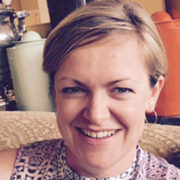
Dr Rahmat Bagus is a mother to 4 children who all breastfed for extended periods of time. She is a medical doctor with an interest in paediatric primary care (having trained at Red Cross Children’s Hospital) and lactation. She established her own private practice called Kids Medicare in 2007 in Parow, Cape Town, South Africa. She is also an International Board Certified Lactation Consultant and extended her practice with “Breastfeeding Care” seeing challenging breastfeeding dyads. She volunteers with La Leche League South Africa, running breastfeeding support meetings and several WhatsApp groups for mothers. She serves as the Professional Liaison Leader for LLLSA, and serves on the Medical Advisory Team and Global Professional Leaders forum for LLL International. She is also a member of Lactation Consultants of Southern- & Africa.
She co-teaches a 30-hour online breastfeeding education course for healthcare workers in South Africa. “As a doctor I was dismayed to find out how little I knew about breastfeeding until I joined LLLSA. It’s sadly
a neglected area of medical training.”
Jean Ridler, RN, RM
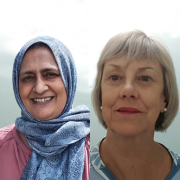
Jean Ridler has been an International Board Certified Lactation Consultant (IBCLC) for 35 years, and retired at the end of 2025. She is the mother of 2 children and grandmother of 4 – all breastfed.
Her varied career spans the private, public, and volunteer sectors, and includes roles as a WHO/UNICEF Trainer of Trainers and a BFHI Assessor. Since becoming an IBCLC in 1990, she has witnessed the exponential growth of lactation science and the transformative impact of the internet on maternal-infant support. She currently co-teaches a 30-hour online breastfeeding education course for healthcare workers in Southern Africa.
“While I’ve learned invaluable lessons from brilliant local and global colleagues, the most profound insights have always come directly from the amazing mothers and babies I’ve had the privilege to serve.”
Breastfeeding vs breastmilk feeding
Considering the well-documented health repercussions of not breastfeeding, several crucial questions arise: What are the ramifications of not feeding directly from the breasts? Is it unfair to mothers who believe they are “breastfeeding” when they are primarily breastmilk feeding? How do we address the fading traditions of direct breastfeeding?
1.50 L (I, V, VI, VII) CERP