

Presentations

Knowledge, kindness and connection in lactation
Online breastfeeding conference
Extended to June 18, 2026
RegisterKnowledge, kindness and connection in lactation, our 28th online breastfeeding conference in English covers a wide range of topics to inform and guide your clinical practice and to inspire and challenge your thinking about breastfeeding, nutrition and human lactation.
What do women want? Supporting infant feeding choices through education, honesty and advocacy.
Linda Deys, Registered Nurse, Endorsed Midwife, IBCLC, PhD - Read moreWhat do women want? Supporting infant feeding choices through education, honesty and advocacy.
Linda Deys, Registered Nurse, Endorsed Midwife, IBCLC, PhD
Dr Linda Deys is an Endorsed Midwife, Registered Nurse and International Board Certified Lactation Consultant with over 35 years’ clinical experience. She is currently working as a Clinical Midwife Consultant – Lactation Support on the south coast of NSW, Australia. She submitted her PhD thesis in 2024 through the Australian Catholic University and is an Honorary Adjunct Fellow at the Western Sydney University. Her interests include lactation education, breastfeeding support, woman-centred and midwifery-led care, and the role of feminism within maternity.
What do women want? Supporting infant feeding choices through education, honesty and advocacy.
Breastfeeding education and support begins in the antenatal period. The complexities of maternity care limits individualised support that meets the needs of women. Breastfeeding is commonly promoted as intuitive and natural, the prospect of challenges is not addressed, and women are left feeling antenatal breastfeeding education is provided to just tick a box. This presentation shares the experience of women trying to breastfeed through barriers, assumptions and expectations. It also showcases the importance of asking the right questions and listening to, and acting on, the answers.
1.00 L (V, VII) CERP

When oral function affects feeding: myofunctional approach
Cristina Vancsa, MD, IBCLC - Read moreWhen oral function affects feeding: myofunctional approach
Cristina Vancsa, MD, IBCLC
Dr Cristina Vancsa is a Clinical Pharmacology & Toxicology Specialist in Epidemiology & Laboratory Medicine. She is an experienced medical doctor specializing in epidemiology, clinical pharmacology, pediatric osteopathy and
myofunctional therapy. She also has expertise in lactation consulting, infant feeding disorders, and oral-motor rehabilitation. She is a researcher with published work on tongue-tie, breastfeeding, and infectious diseases. She is also a trainer and speaker in neonatal health, breastfeeding, and babywearing.
When oral function affects feeding: a myofunctional approach
Breastfeeding is closely linked to infant oral function and early developmental processes. This presentation introduces a myofunctional lens to understanding infant oral function in breastfeeding dyads, highlighting respectful, family-centred interventions that support feeding, comfort, and connection. The presentation emphasises ethical, evidence-informed practice and the role of the IBCLC in supporting families through observation, education, and collaborative care.

Understanding the breastfeeding landscape in Africa
Lope Adejuyigbe, MBBS, CBS, IBCLC - Read moreUnderstanding the breastfeeding landscape in Africa
Lope Adejuyigbe, MBBS, CBS, IBCLC
Dr. Lope Adejuyigbe is the founder and Director of The BestFeeding Club — Nigeria’s first dedicated breastfeeding clinic — and creator of Nigeria’s first 24/7 Breastfeeding Hotline. The BestFeeding Club has directly supported over 600 mothers through virtual and physical services worldwide including Nigeria, South Africa, Ghana, Cameroon, Kenya, USA, Ireland and more. Recognized as a thought leader in newborn and infant nutrition, Dr. Lope has consulted on international health initiatives, including serving as expert consultant for the innovative Breastmilk Money project by ServicePlan Group Munich, which won multiple awards at the 2025 Cannes Lions Festival in France. She trains other healthcare providers in Nigeria in breastfeeding counselling skills and is also interested in research on human lactation in Africa. When she has some free time, she loves her Korean series, peppery food and a good book/movie.
Understanding the breastfeeding landscape in Africa
A look into breastfeeding in Africa as a whole, with particular spotlight on Nigeria, taking into account culture & tradition as well as the effect of IBCLC western influence and the various drives to promote breastfeeding.
1.00 L (V, VII) CERP
Breastfeeding messages - are we self-sabotaging?
Rahmat Bibi Bagus, MBChB, IBCLC - Read moreBreastfeeding messages - are we self-sabotaging?
Rahmat Bibi Bagus, MBChB, IBCLC
Dr Rahmat Bagus is a mother to 4 children who all breastfed for extended periods of time. She is a medical doctor with an interest in paediatric primary care (having trained at Red Cross Children’s Hospital) and lactation. She established her own private practice called Kids Medicare in 2007 in Parow, Cape Town, South Africa. She is also an International Board Certified Lactation Consultant and extended her practice with “Breastfeeding Care” seeing challenging breastfeeding dyads. She volunteers with La Leche League South Africa, running breastfeeding support meetings and several WhatsApp groups for mothers. She serves as the Professional Liaison Leader for LLLSA, and serves on the Medical Advisory Team and Global Professional Leaders forum for LLL International. She is also a member of Lactation Consultants of Southern- & Africa.
She co-teaches a 30-hour online breastfeeding education course for healthcare workers in South Africa. “As a doctor I was dismayed to find out how little I knew about breastfeeding until I joined LLLSA. It’s sadly a neglected area of medical training.”
Breastfeeding messages – are we self-sabotaging?
This presentation explores the impact of public messaging on breastfeeding, highlighting how even well-intentioned advice and subtle commercial influences can undermine maternal confidence and successful breastfeeding. It calls for improved critical evaluation of breastfeeding messages, especially in the context of formula promotion and digital information, and encourages greater awareness of unconscious biases among healthcare workers and advocates to better support mothers on their breastfeeding journeys.
1.00 L (V, VII) CERP

Impact of breastfeeding duration on brain structure at 10 years of age
Christian Stephan-Otto, PhD - Read moreImpact of breastfeeding duration on brain structure at 10 years of age
Christian Stephan-Otto, PhD
Dr Christian Stephan-Otto is a researcher at the Sant Joan de Déu Research Institute in Barcelona, Spain. He began his career in cosmology, completing a PhD in Physics at Tufts University, before transitioning into biomedicine. His work now focuses on neuroimaging research, with important contributions to understanding how biological and cognitive processes shape the brain across the lifespan.
Impact of breastfeeding duration on brain structure at 10 years of age
This presentation will discuss recent findings on how longer breastfeeding duration is associated with greater cortical gray matter volume in children, supporting a link between early nutrition and brain integrity during development.
1.00 L (VII) CERP

Making sense of postpartum anxiety and lactation
Gretchen Becker Crabb, MSE, LPC, OTR/L, CLC, IMH-E - Read moreMaking sense of postpartum anxiety and lactation
Gretchen Becker Crabb, MSE, LPC, OTR/L, CLC, IMH-E
Gretchen Becker Crabb is an Occupational Therapist, Licensed Professional Counselor, Certified Lactation Counselor, and Infant Mental Health Endorsed Clinical Mentor. She is also a Certified Lactation Counselor, retired La Leche League Leader, and Brazleton Newborn Observation (NBO) trainer.
Gretchen’s passion is rooted in fostering lifelong relationships and connection through co-regulation in pregnancy and beyond. Her unique approach to lactation support and therapy is rooted in culturally attuned sensory, somatic, and trauma-informed mental health techniques.
Gretchen Becker Crabb owns and operates a private practice in Madison, Wisconsin, USA and is mentor faculty for the University of Wisconsin-Madison Infant, Early Childhood and Family Mental Health Capstone Program. For 25 years, she has provided developmental, trauma, feeding, and attachment support for tiny humans and their caregivers in birth to three, preschool, private practice, and peer group settings.
Gretchen is an international speaker, reflective supervisor, and infant mental health consultant. In these roles, she offers compassionate, experiential, and reflective holding spaces for professionals. She is an United States Air Force spouse and parent, and mother of three boys.
Making sense of postpartum anxiety and lactation
This presentation will explore the complex neurobiological and sensory correlations between postpartum anxiety and lactation. Sensory-informed and strengths based strategies that support infant/parent wellbeing and feeding relationship will be discussed and further highlighted in a reflective case study.
1.00 L (V, VII) CERP

Journey: from breastfeeding champion to IBCLC and the power of connection in lactation and family care
Muswamba Mwamba, DrPH, MPH, MS, IBCLC, RLC - Read moreJourney: from breastfeeding champion to IBCLC and the power of connection in lactation and family care
Muswamba Mwamba, DrPH, MPH, MS, IBCLC, RLC
Dr Muswamba Mwamba is an International Board-Certified Lactation Consultant, a public health practitioner, and a scholar. His research interests focus on immigrant health within the minority group in the context of the U.S. health disparity. Muswamba helps mothers and babies achieve the best health outcomes by teaching and inspiring their partners and fathers to work together to remove barriers that prevent successful breastfeeding. As a professor, Muswamba brings a global perspective to enlighten graduate students on significant developments and trends in infant feeding, nutrition, and public health leadership.
Muswamba is a lifelong learner. He trained in Belgium, earning a bachelor’s degree in agricultural engineering and a master’s degree in the biochemistry of human nutrition from the Catholic University of Louvain. He earned a second master’s in food science and technology from Ghent University. Witnessing a striking disparity in his maternal and child health practice, he deepened his understanding of the complexity and scope of public health in the U.S. and elsewhere. He subsequently earned a master’s degree in public health at the University of North Texas and a doctoral degree in Public Health Executive Leadership from the University of North Carolina at Chapel Hill.
Journey: from breastfeeding champion to IBCLC and the power of connection in lactation and family care
Muswamba’s lactation journey started with his curiosity about why there are so many infant formulas at various prices. At one point, he wondered if these formulas were meant to imitate human milk. His focus then shifted to understanding breast milk and to leading the Peer Dad Program, a father-breastfeeding support initiative.
1.00 L (V, VII) CERP
When a tongue tie release does not help. Why you should not miss a vitamin B12 deficiency.
Maaike van Broekhoven, RN, IBCLC - Read moreWhen a tongue tie release does not help. Why you should not miss a vitamin B12 deficiency.
Maaike van Broekhoven, RN, IBCLC
Maaike van Broekhoven has been a Registered Nurse since 1985 and started working in maternity care in the 90s. She became an IBCLC in 2001. Since she discovered tongue tie could be a thing she started working with a dentist. Now about ten years later helping with tongue tie releases and seeing the mothers and babies back, she discovered an underlying health problem which many healthcare providers miss: an epidemic of misdiagnosis, B12 deficiency.
When a tongue tie release does not help. Why you should not miss a vitamin B12 deficiency.
If you do not know about the signs and symptoms of B12 deficiency in mothers and their offspring you could unintentionally lead them up the path of more suffering and permanent neurological damage. Not only are we eating less animal based food, but are we taking the pill and medications that can lower our B12 and suffer from auto-immune conditions or hereditary conditions or simply removed a big part of our stomach to lose weight so we cannot absorb sufficient B12. Learn about the symptoms and how you can help in this presentation.
1.00 L (I) CERP

Grandparents’ knowledge, attitude and experiences supporting breastfeeding - an intergenerational approach to breastfeeding support
Jennifer Abbass-Dick, RN, IBCLC, PhD - Read moreGrandparents’ knowledge, attitude and experiences supporting breastfeeding - an intergenerational approach to breastfeeding support
Jennifer Abbass-Dick, RN, IBCLC, PhD
Dr Jennifer Abbass-Dick has worked with perinatal families as both a Registered Nurse and lactation consultant and researcher in the hospital and community throughout her career. She is dedicated to assisting and empowering parents to have a positive and healthy transition to parenthood. She is currently an Associate Professor at Ontario Tech University. Her research focuses on creating resources in partnership with parent groups and health care providers to standardize breastfeeding education. This work is designed to assist families in increasing their health literacy and meeting their infant feeding goals.
Grandparents’ knowledge, attitude and experiences supporting breastfeeding – an intergenerational approach to breastfeeding support
Grandparents’ support can impact breastfeeding outcomes. The purpose of the study was to determine grandparents’ attitudes, knowledge, and experiences with supporting breastfeeding for their grandchildren. 101 grandparents were surveyed and it was found even those with high knowledge and attitudes scores can experience challenges supporting breastfeeding and have their own unique needs for education and support.
1.00 L (V, VII) CERP

Breastfeeding considerations among culturally and linguistically diverse and Indigenous Australian populations
Maria Oliveri, MPhil, RN, Midwife, IBCLC - Read moreBreastfeeding considerations among culturally and linguistically diverse and Indigenous Australian populations
Maria Oliveri, MPhil, RN, Midwife, IBCLC
Maria Oliveri is an Australian Registered Nurse and Midwife and Lactation Consultant (IBCLC), of migrant Greek ancestry, having practiced in Australia and Canada, and collaborated on Maternal-child health and birthing projects in South-Asia (Bangladesh and China).
She was invited to facilitate and implement the “free birthing” positions project among midwives & OB/GYN’s in Guangzhou, China; improving women’s birthing autonomy and outcomes. Her diverse experience includes refugee midwifery group practice and research midwife in longitudinal Indigenous Australian birthing cohorts. A strong advocate for improving perinatal outcomes, including breastfeeding, among marginalised, Culturally and Linguistically Diverse (CALD) and Indigenous Australians led to her current Research Master’s, investigating the barriers and enablers of breastfeeding for Indigenous and CALD Australian populations.
Currently Maria is working at Mater Mother’s Hospital and Mater Research as a Midwife/IBCLC/Parent Educator/Research Midwife, while completing her Master’s Thesis (her fourth child) while raising her three children.
Breastfeeding considerations among culturally and linguistically diverse and Indigenous Australian populations
Globally, breastfeeding rates remain lower among marginalised populations, including culturally and linguistically diverse and Indigenous populations. The factors influencing this health behaviour in the Australian context are multifaceted and complex, with socio-demographics, socio-economic status, social supports, birthing practices, rurality, education levels, employment, ethnic and cultural influences, and colonisation history all posing as enablers or barriers.
1.00 L (V, VII) CERP
Breastfeeding during emergencies - part 1: field experiences and lessons from the 2024-2025 war in Lebanon
Nadiya Dragan, IBCLC - Read moreBreastfeeding during emergencies - part 1: field experiences and lessons from the 2024-2025 war in Lebanon
Nadiya Dragan, IBCLC
Nadiya Dragan is an IBCLC in private practice. She is a mother of four fully breastfed kids till self-weaning and a passionate advocate of breastfeeding running many support groups. Nadiya currently serves as a member of the Relactation Infographic Expert Group at the IFE Core Group and a member of the Breastfeeding Support in Emergencies workgroup.
Breastfeeding during emergencies part 1: field experiences and lessons from the 2024-2025 war in Lebanon
This presentation discusses the critical life-saving role of breastfeeding during emergencies at the example of the devastating war in Lebanon with Israel 2024-2025. It highlights the efforts of the country’s breastfeeding professionals who supported displaced and suffering mothers both on-site and online. It concludes with the practical lessons learned, what worked and what failed?
0.75 L (VII) CERP

Breastfeeding during emergencies - part 2: supporting mothers during 2024-2025 war in Lebanon
Veronica Rohalevich, CBS, LLL Leader - Read moreBreastfeeding during emergencies - part 2: supporting mothers during 2024-2025 war in Lebanon
Veronica Rohalevich, CBS, LLL Leader
Veronica Rohalevich is a Certified Breastfeeding Specialist (CBS), La Leche League Leader, and founder of a vibrant breastfeeding support community. Originally from Belarus and now based in Lebanon, she is a mother of three and is proudly still breastfeeding her 7-year-old daughter. Veronica blends evidence-based knowledge with compassionate guidance, empowering families to breastfeed with confidence.
Outside her advocacy work, she enjoys gardening, cross-stitching, and creating wholesome meals for her family.
Breastfeeding during emergencies – part 2: supporting mothers during 2024-2025 war in Lebanon
This presentation examines the common challenges in emergencies, including malnutrition, stress and breastfeeding. It discusses breastfeeding support in shelters and how this can be managed. It outlines the difficulties with donations and untargeted formula distribution. And outlines ideas for future responses.
1.00 L (VII) CERP
Compassionately inquiring into the story of your life
Marianne Kolkena, MSc, IBCLC - Read moreCompassionately inquiring into the story of your life
Marianne Kolkena, MSc, IBCLC
Marianne Kolkena certified as a Lactation Consultant IBCLC in 2008, after many years of volunteer work in the Dutch breastfeeding association. She started her private practice in her home town Assen, Netherlands, and was increasingly fascinated by anthropological insights regarding parenting and breastfeeding. After translating James McKenna’s Sleeping With Your Baby, Jill Bergman’s Hold Your Prem, and Dia Michels’ If My Mom Were a Platypus into Dutch, she started studying at the University of Amsterdam. She finished her bachelor’s in Cultural Anthropology & Development Sociology (with honours) in 2017 and her master’s in Medical Anthropology & Sociology in 2019. In December 2025, she was busy finishing the Compassionate Inquiry programme with Gabor Maté, a psychotherapeutic approach to look into the impact of ACEs (Adverse Childhood Experiences or childhood trauma) and the transformative effect of compassion on body-mind healing and wellbeing. Within Compassionate Inquiry she also undertook the Suicide Attention Training and The Portal, a training aimed at compassionate care around birth with attention for all the sensitivities that show up in that stage. She feels deeply moved by the powerful vulnerability of the pre- and perinatal period and advocates for trauma-sensitive care. Weaving together her lactation and trauma work to support mother-baby dyads to create secure attachment from and for true authenticity is where her heart and soul reside. Marianne is a mother of four amazing home-birthed and breastfed daughters and granny of seven beautiful grandchildren who entered the world through the birth pool, landing at mama’s breast.
Compassionately inquiring into the story of your life
Especially after the birth of their babies, parents in general and (breastfeeding) mothers in particular can run into deeply buried experiences of their own childhood. Recollections from the mind may come up, as well as memories stored in the body, sometimes non-verbal, sometimes preverbal. The birth and presence of a breastfeeding baby can be both soothing and triggering because of the level of availability that is required to fulfil baby’s needs. When the baby is fully breastfeeding, especially the nursing mother can experience strong triggers. When there are many stressors in the parents’ lives, they can experience difficulty in remaining kind and patient, sensitive and responsive, even when they know what their child really needs. Awareness around the impact of Adverse Childhood Experiences on health and wellbeing can be very helpful in understanding your own and other people’s behaviour. What may look or feel like dysfunction, is often a survival strategy aimed at maintaining a desperately needed sense of safety.
In this presentation we will look at the importance of a trauma-informed and trauma-sensitive world-view, specifically in the perinatal period and during the first weeks of establishing breastfeeding. In order to understand what is meant by that, we will elaborate on concepts like trauma, attachment, stress and stress regulation, triggers, trauma responses and the role of compassion and non-judgment in all of this. Short clips from the documentaries Resilience – The Biology of Stress and the Science of Hope and The Wisdom of Trauma will be part of the presentation.
1.50 L (V, VII) CERP
Human lactation: a human right
Maria da Silva, BA, JD, LLM - Read moreHuman lactation: a human right
Maria da Silva, BA, JD, LLM
Maria da Silva is a Certified Legal Translator and International Lawyer, both credentials obtained from the University of Buenos Aires, Argentina. She also holds a Master’s Degree in International Human Rights Law from the same institution, where she is currently pursuing a PhD in International Law. Her field of specialization is international human rights law, with a particular emphasis on early childhood rights and the right to breastfeed and be breastfed. Her doctoral research examines human lactation as a fundamental human right. Maria presently serves as an Adjunct Professor of Public International Law at the University of Buenos Aires and as a lecturer in the Human Lactation Program at the University of Córdoba, Argentina.
Human lactation: a human right
This presentation examines the intersection of human lactation and the law, tracing how States have regulated breastfeeding at both national and international levels. Building on this normative foundation, it argues that human lactation constitutes a fundamental human right jointly held by the mother–infant dyad, with States serving as the primary guarantors, not only through the obligations to promote, support, and protect breastfeeding, but also by respecting and fully realizing this right.
1.00 E (VII) CERP
Are we weaning too early? Beyond the 2 year mark: what research and practice reveal about effects of full term breastfeeding
Nadiya Dragan, IBCLC, LLL Leader - Read moreAre we weaning too early? Beyond the 2 year mark: what research and practice reveal about effects of full term breastfeeding
Nadiya Dragan, IBCLC
Nadiya Dragan is an IBCLC in private practice and a founding LLL Leader in Lebanon, Middle East (since 2012). She is a mother of four fully breastfed kids till self-weaning and a passionate advocate of breastfeeding running many support groups. Nadiya currently serves as a member of the Relactation Infographic Expert Group at the IFE Core Group and a member at the LLLI Breastfeeding Support in Emergencies work group.
Are we weaning too early? Beyond the 2 year mark: what research and practice reveal about effects of full term breastfeeding
For decades, public health messaging has emphasized breastfeeding up to two years — yet emerging evidence suggests that breastfeeding for three, four, five or more years can give profound life-long effects for both children and mothers. This presentation examines current research and experiences of mothers breastfeeding beyond 2 years, highlighting possible outcomes for both children and mothers, while also addressing persistent myths and social stigma that undermine continued breastfeeding, despite biological norms and evidence of safety and benefit. The aim of this session is to equip participants with evidence from the most up-to-date research, confidence and renewed motivation to support mothers who breastfeed beyond two years.
1.00 L (I, V, VII) CERP

The quiet crisis: how sleep training culture undermines breastfeeding
Charlotte Treitl, BSc, IBCLC - Read moreThe quiet crisis: how sleep training culture undermines breastfeeding
Charlotte Treitl, BSc, IBCLC
Charlotte Treitl, widely known as “The Milk Rebel,” is a powerhouse in the world of lactation and infant feeding advocacy. As an International Board Certified Lactation Consultant (IBCLC) and Clinical Lead for Parenting at Anya, Charlotte is on a mission to revolutionise breastfeeding support—making it accessible, inclusive, and empowering for all families. With a decade of experience, Charlotte’s expertise spans from peer support and grassroots activism to clinical leadership and championing policy change. She provides personalised, evidence-based guidance, helping parents confidently navigate breastfeeding, chestfeeding, and human milk provision. At Anya, she spearheads the development of cutting-edge, research-backed resources to support families through the challenges of early parenthood. But Charlotte is more than just a lactation specialist —she’s a rebel with a cause. She fights for those without a voice or influence, advocating for systemic change to ensure breastfeeding support is a right, not a privilege. A fierce intersectional feminist, Charlotte isn’t afraid to shake up the status quo. She’s loud, a little sweary, and unapologetically passionate about improving health outcomes for families worldwide.
The quiet crisis: how sleep training culture undermines breastfeeding
This presentation explores how dominant infant sleep narratives conflict with breastfeeding physiology and contribute to parental exhaustion, anxiety, and unplanned breastfeeding cessation. Using evidence, case examples, and media analysis, it examines how sleep training culture and commercial pressures shape family experiences. Participants will gain language and context to support families with infant sleep concerns in a way that protects breastfeeding and parental wellbeing.
1.00 L (I, V, VII) CERP

Supporting breastfeeding practices of incarcerated mothers
Shela Hirani, PhD, MScN, BScN, RN, IBCLC, FAAN - Read moreSupporting breastfeeding practices of incarcerated mothers
Shela Hirani, PhD, MScN, BScN, RN, IBCLC, FAAN
Dr Shela Hirani is a Professor at the University of Regina (Canada), Founding Director of the Breastfeeding Advocacy Research Lab, and Fellow of the American Academy of Nursing. She is a neonatal, maternal and child health expert, researcher, lactation consultant and an advocate of baby-friendly initiatives. Dr Hirani’s breastfeeding advocacy in Canada and beyond has promoted breastfeeding, dismantled breastfeeding barriers, led to a baby-friendly movement, and informed programs, policies and practices in diverse care settings, including hospitals, disaster zones, educational institutions, workplaces and public spaces. Her breastfeeding advocacy and impactful policy-shaping research has advanced health equity for marginalized mothers and infants, supporting over 166,000 families globally.
Based on her contributions, the World Health Organization recognized her as one of the 100 outstanding women nurses around the world in 2020. Dr Hirani received over 50 honors recognizing her work, including WXN Canada’s Most Powerful Women Top 100 Award Winner [in the Category of Community Impact], the King Charles III Coronation Medal from the Canadian Nurses Association, the Queen Elizabeth II Platinum Jubilee Medal from the Government of Saskatchewan, Multicultural Leadership Award from the Lieutenant Governor of Saskatchewan, YWCA Women of distinction award, and Sigma Nursing’s Emerging Researcher Award.
She is an elected board member of reputable international, national, and provincial organizations. She serves as an editorial board member of reputable global health journals. Dr Hirani’s breastfeeding advocacy efforts worldwide led to her appointment as a Board Member and Regional Director for the E Mediterranean Region for the Council of International Neonatal Nurses (COINN), Working Group Member on WHO’s Every Woman Every Newborn Everywhere (EWENE), and Core Group Member for Emergency Nutrition Network’s Infant Feeding in Emergencies (IFE). Through these representations, she is advocating for the rights and needs of breastfeeding mothers, which are informing equitable and inclusive breastfeeding policies and practices. Dr Hirani is also committed to providing quality mentorship to the next generation of leaders in breastfeeding advocacy.
Supporting breastfeeding practices of incarcerated mothers
Breastfeeding has many benefits for mothers and babies; however, mothers who have been incarcerated are less likely to breastfeed their babies. For incarcerated mothers, breastfeeding and the use of breast milk hold a particular significance in saving the lives of their young children. This presentation will discuss the breastfeeding barriers experienced by incarcerated women and present the recommended strategies to support breastfeeding in prison.
1.00 L (III, V, VI, VII) CERP
Human milk's role in modulating the gut villi function
Nada Atef, MD, PhD, ped GI dip, IBCLC - Read moreHuman milk's role in modulating the gut villi function
Nada Atef, MD, PhD, ped GI dip, IBCLC
Dr Nada Atef is a consultant in pediatric medicine who obtained her doctorate degree at 2023 from Ain Shams University, Cairo, Egypt, with published research in Pediatric Gastroenterology in 2020. Her masters degree was obtained from Ain Shams University with a special interest in pediatric gastroenterology and endoscopy in 2015.
To add more knowledge and for her own personal need as a mother of two daughters, which started her interest in lactation, she became an IBCLC 2018 and recertified in 2023.
Dr Atef works in the Mansheyet el Bakry Hospital, Ministry of Health as a neonatalology specialist and also is currently working at a private pediatric gastroenterology clinic supporting breastfeeding.
Human milk’s role in modulating the gut villi function
Human milk contains agents that affect the growth, development and functions of the epithelium, immune system or nervous system of the gastrointestinal tract. Some human and animal studies indicate that human milk affects the growth of intestinal villi, the development of intestinal disaccharidases, the permeability of the gastrointestinal tract and resistance to certain inflammatory/immune-mediated diseases.
Human milk profoundly modulates gut villi and intestinal development through bioactive components like growth factors (EGF, IGF-1), oligosaccharides (HMOs), and cytokines, promoting healthy epithelial growth, enhancing barrier function, reducing inflammation, and shaping the microbiome, which together create a robust, mature gut suited for extrauterine life, often resulting in smaller but more functional villi compared to formula-fed infants.
Breastfeeding and weaning are important, physiologically significant, luminal events that influence the growth of the small intestine in humans. Studies indicate that breastfed infants have smaller villi and crypts than bottle-fed infants, suggesting that crypt fission may be the predominant mechanism of epithelial growth during milk feeding whereas crypt hyperplasia predominates later during weaning (2-6 months)?
Researchers used human pediatric enteroids and interrogated maternal milk’s impact on epithelial cell maturation and function in comparison with commercial infant formula. Colostrum applied to pediatric enteroid monolayers reduced ion permeability, stimulated epithelial cell differentiation, and enhanced tight junction function by upregulating occludin expression.
1.00 L (II, III) CERP

Lactation support after gestational diabetes: an evidence review
Kimberly Doughty, MPH, PhD, CHES - Read moreLactation support after gestational diabetes: an evidence review
Kimberly Doughty, MPH, PhD, CHES
Dr Kim Doughty is an Assistant Professor at Fairfield University, where she teaches in the undergraduate and graduate Public Health programs. She holds a PhD in Public Health Nutrition from the University of Massachusetts Amherst and a Master of Public Health degree from Southern Connecticut State University. Dr Doughty’s research focuses broadly on preventing chronic disease, with particular attention to early-life risk factors and maternal-child health. Her recent work has centered on barriers and facilitators of breastfeeding, especially among women with a history of gestational diabetes mellitus.
Lactation support after gestational diabetes: an evidence review
This presentation will provide an overview of what is known about breastfeeding after gestational diabetes from multiple angles. It will cover the health benefits of breastfeeding for women with a history of gestational diabetes and their infants, differences in breastfeeding outcomes, factors that may make contribute to reduced breastfeeding, and strategies for supporting lactation in this population.
1.00 L (II, III, VII) CERP
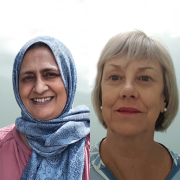
Breastfeeding vs breastmilk feeding
Rahmat Bibi Bagus, MBChB, IBCLC and Jean Ridler, RN, RM - Read moreBreastfeeding vs breastmilk feeding
Rahmat Bibi Bagus, MBChB, IBCLC
Dr Rahmat Bagus is a mother to 4 children who all breastfed for extended periods of time. She is a medical doctor with an interest in paediatric primary care (having trained at Red Cross Children’s Hospital) and lactation. She established her own private practice called Kids Medicare in 2007 in Parow, Cape Town, South Africa. She is also an International Board Certified Lactation Consultant and extended her practice with “Breastfeeding Care” seeing challenging breastfeeding dyads. She volunteers with La Leche League South Africa, running breastfeeding support meetings and several WhatsApp groups for mothers. She serves as the Professional Liaison Leader for LLLSA, and serves on the Medical Advisory Team and Global Professional Leaders forum for LLL International. She is also a member of Lactation Consultants of Southern- & Africa.
She co-teaches a 30-hour online breastfeeding education course for healthcare workers in South Africa. “As a doctor I was dismayed to find out how little I knew about breastfeeding until I joined LLLSA. It’s sadly
a neglected area of medical training.”
Jean Ridler, RN, RM
Jean Ridler has been an International Board Certified Lactation Consultant (IBCLC) for 35 years, and retired at the end of 2025. She is the mother of 2 children and grandmother of 4 – all breastfed.
Her varied career spans the private, public, and volunteer sectors, and includes roles as a WHO/UNICEF Trainer of Trainers and a BFHI Assessor. Since becoming an IBCLC in 1990, she has witnessed the exponential growth of lactation science and the transformative impact of the internet on maternal-infant support. She currently co-teaches a 30-hour online breastfeeding education course for healthcare workers in Southern Africa.
“While I’ve learned invaluable lessons from brilliant local and global colleagues, the most profound insights have always come directly from the amazing mothers and babies I’ve had the privilege to serve.”
Breastfeeding vs breastmilk feeding
Considering the well-documented health repercussions of not breastfeeding, several crucial questions arise: What are the ramifications of not feeding directly from the breasts? Is it unfair to mothers who believe they are “breastfeeding” when they are primarily breastmilk feeding? How do we address the fading traditions of direct breastfeeding?
1.50 L (I, V, VI, VII) CERP
